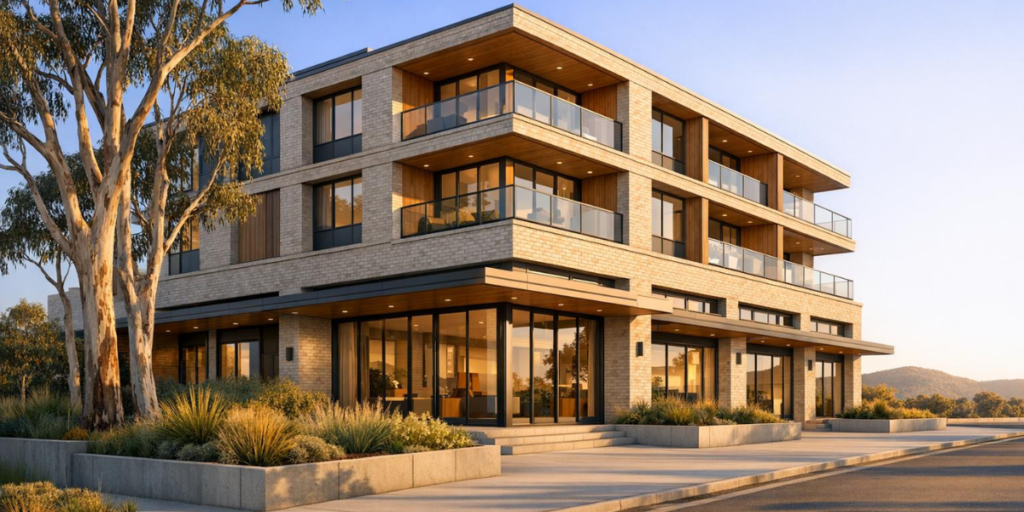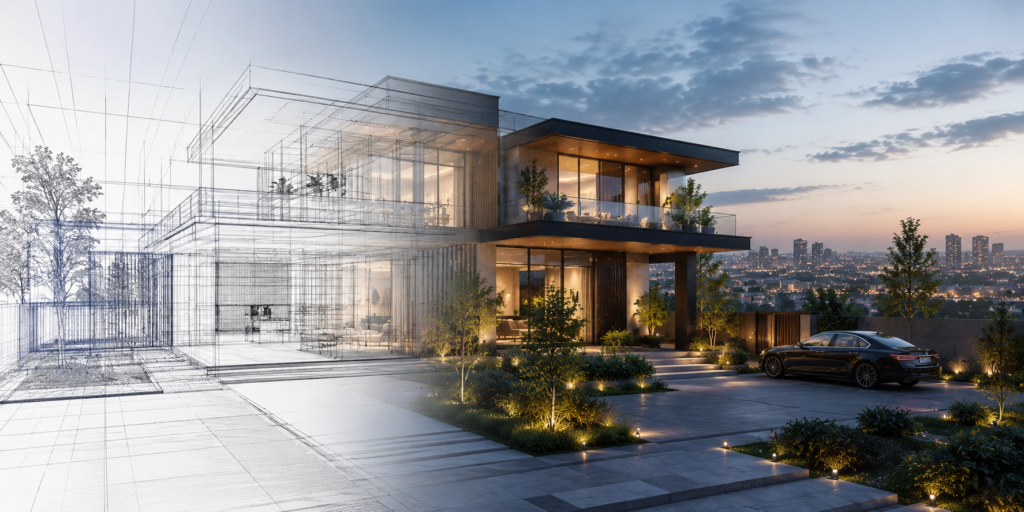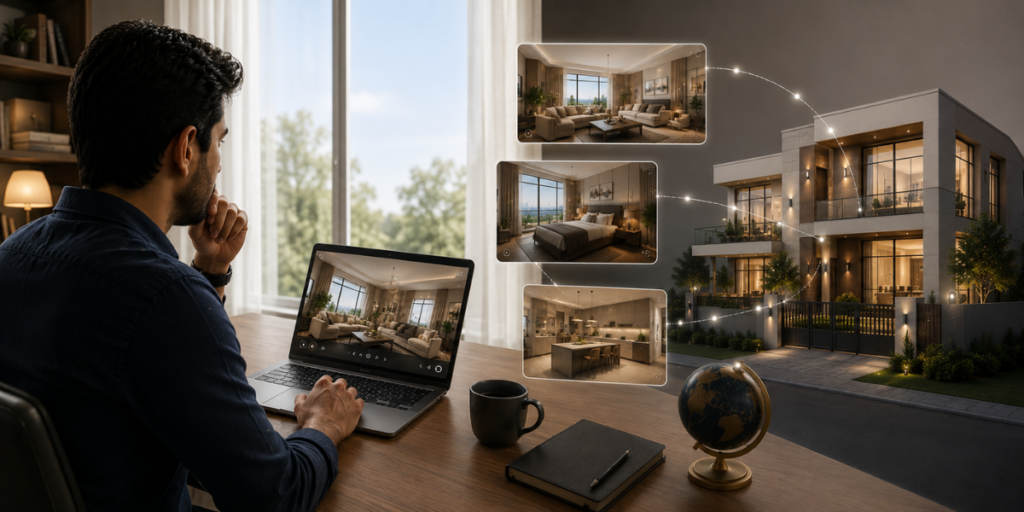
Until recently, getting 3D visuals for a project meant waiting. You sent drawings to a studio, waited for the first images, sent comments and waited again. Any change, a different facade colour or another floor tile, meant another round of rendering.
Real-time rendering is changing that, and it is starting to change how developers in Pakistan present and sell their projects. As an architectural visualization company in Pakistan, we have watched this shift happen project by project.
What real-time rendering actually means
In traditional rendering, the computer calculates each image one at a time. A single high-quality frame can take minutes or even hours, and a video made of thousands of frames takes far longer. That is why traditional 3D cinematic walkthrough services often needed weeks for a single film.
Real-time rendering works the way modern video games do. The 3D scene is calculated many times per second, so you can move around inside it, change things and see the result straight away. Tools like Unreal Engine, which started in gaming, are now widely used in architecture for exactly this reason. Epic Games released Unreal Engine 5.8 in June 2026, and each version brings real-time quality closer to traditional renders.
What changes for developers
1. Faster decisions in meetings
Picture yourself with your architect and partners, looking at the building on a big screen. Someone asks how the facade would look in a darker stone. Instead of waiting a week, the change happens in front of you. Decisions that used to take several rounds can happen in one sitting.
2. Buyers can explore on their own
With real-time technology, a real estate virtual tour does not have to be a set of fixed 360 images. Buyers can walk freely through the apartment, switch between day and night, try different finishes and look out of any window. That kind of control keeps them engaged far longer than a brochure.
3. Faster, more flexible video
Real-time engines also speed up video production. Studios can now deliver film-quality walkthrough videos in less time, and changing a camera path or adding a scene is much easier than before. For a launch with a tight deadline, that matters.
4. Sales offices become experiences
Some developers now set up touchscreens or large displays where buyers pick a floor, choose a unit and see the actual view from that apartment. It is memorable, and it helps buyers commit to a specific unit faster.
Why this matters more in Pakistan
A few things make real-time especially useful here.
- Off-plan is the norm. Most projects are sold before or during construction, so visuals carry the entire sale.
- Overseas buyers are a big market. They cannot visit the site, so an interactive tour on their phone or laptop is often what tips the decision.
- Competition is growing. In Karachi, Lahore and Islamabad, more projects are launching in the same areas. Buyers compare, and the project that lets them explore more usually stays top of mind.
How it fits into your marketing
Real-time content is not just for the sales office. It feeds directly into digital marketing for off-plan projects. One real-time model can produce:
- Short clips for Instagram reels and Facebook ads
- A full walkthrough for YouTube
- An interactive tour embedded on your website
- Fresh visuals whenever the design changes, without starting over
That flexibility keeps a campaign fresh over many months, which is important for projects with long sales cycles.
Is it right for every project?
Not always. For a small project that only needs a handful of still images, traditional rendering is often simpler and more cost-effective. Very high-end hero shots for billboards may still be finished with offline renderers for that last level of detail.
Real-time makes the most sense for:
- Large residential or mixed-use projects
- Projects targeting overseas buyers
- Launches that need a steady stream of content over a long period
- Developers who want to make design decisions faster
The bigger picture
Buyers are already used to exploring products, hotels and cars on a screen. Property is following the same path. Developers who let buyers explore their project, rather than just look at it, will have a clear edge.
Pixarch works with both traditional and real-time tools and chooses what fits each project. If you would like to see how real-time visuals could work for your next launch, our team is happy to walk you through it.